
Actinic Keratosis
Actinic keratosis, also called solar keratosis, is a skin condition that causes dry, scaly patches on sun-damaged skin. A small proportion of patches can become skin cancer, so they are treated and monitored rather than ignored.
Medicines used to treat Actinic Keratosis
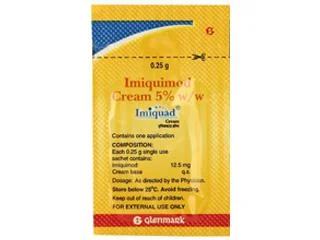
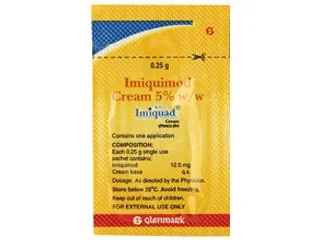
Imiquimod Cream
5%
Imiquimod cream contains imiquimod and is used for actinic keratosis and external genital warts. It comes in one strength and several pack sizes. Each option lists its price per tube.
Key points
- Short-wavelength UVB damages DNA in skin cells, leading to abnormal skin cell development.
- Patches usually appear on the face, hands, arms, ears, scalp and legs.
- A single actinic keratosis rarely becomes squamous cell carcinoma.
Causes and triggers
Actinic keratosis is linked to long-term ultraviolet exposure. People with fair skin who live where ultraviolet exposure is high are more vulnerable.
Symptoms
The skin can feel rough, dry and scaly, with a texture like sandpaper.
Treatment options
Options include prescription creams or gels, freezing, minor surgery and photodynamic therapy. Imiquimod Cream 5% comes as a tube and is used for actinic keratosis. Imiquimod works by stimulating the local immune response to clear abnormal cells. Orders are shipped from pharmacy partners to Malaysia in discreet packaging.
When to see a doctor
A patch that becomes tender, thickened, ulcerated or larger needs medical assessment, as does one that changes shape, bleeds or grows rapidly.
What the sources say
- More than ten actinic keratoses carry an estimated 10 to 15% risk of squamous cell carcinoma developing at some stage (DermNet).
- Patches are usually one to two centimetres across and may be skin-coloured, pink, red or brown (NHS).
Further reading
Last updated