
Basal Cell Carcinoma
Basal cell carcinoma is a skin cancer that starts in the basal cells of the skin’s outer layer. It tends to grow slowly and rarely spreads to other parts of the body, but left alone it keeps growing into the skin around it.
Medicine used to treat Basal Cell Carcinoma
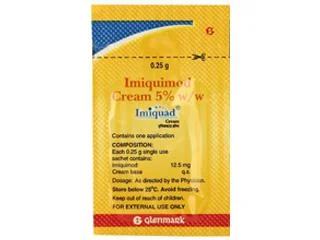
Key points
- Most people notice a firm, round, raised growth; on lighter skin it is often shiny and pink or red.
- Surgical removal is the most common treatment.
- Imiquimod cream is approved for superficial basal cell carcinoma, the flat type that stays near the surface.
Symptoms
Besides a raised growth, it can show as a scaly patch, a cluster of shiny bumps, a mark that looks like a scar, or a sore that does not heal, or heals and comes back.
Treatment options
A doctor confirms the diagnosis, usually with a biopsy, and most lesions are then cut out. For the superficial type, Aldara and Imiquimod Cream contain imiquimod, which makes the treated skin mount its own immune response against the abnormal cells.
When to see a doctor
See a doctor about any growth or area of skin that hurts, itches, bleeds, crusts or scabs for more than 4 weeks, or a sore that keeps coming back.
What the sources say
- Basal cell carcinoma tends to grow slowly and rarely spreads; surgical excision is the most common treatment, and imiquimod is FDA-approved for superficial basal cell carcinoma (American Academy of Dermatology).
- A growth or area of skin that hurts, itches, bleeds, crusts or scabs for more than 4 weeks needs a GP (NHS).
Further reading
Last updated