
Hirsutism
Hirsutism means a woman grows thick, dark hair in a male pattern on her face, chest, abdomen, back or thighs. The hair is dark and coarse, unlike the fine vellus hair found elsewhere on the body. It is a common complaint.
Medicines used to treat Hirsutism
Eflornithine
13.9%
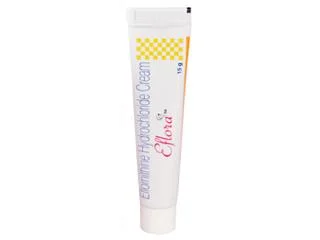
Eflornithine cream is supplied in a tube and is used to slow the growth of unwanted facial hair in women. You can choose from one strength and several pack sizes. You see the price per tube for each option.
Key points
- Hirsutism affects roughly 5 to 10 percent of all women.
- The usual driver is a change in androgen levels, either more of these hormones or greater sensitivity to them.
- Polycystic ovary syndrome (PCOS) is the most frequent underlying cause.
What causes it
Other cases trace to adrenal disorders, thyroid problems or medicines that lift androgen levels high enough to cause excess hair. In a smaller proportion of women no hormonal cause is found.
Medicines used for hirsutism
Because androgens act on hair follicles, treatment aims to reduce their effect. Cyproterone blocks the androgen receptor, and ethinylestradiol lowers the ovaries’ own androgen output; the two are combined in Diane 35 tablets (2/0.035mg), used for hirsutism and acne vulgaris. For facial hair, eflornithine 13.9% cream acts on an enzyme in the follicle to slow regrowth, and is supplied as Eflornithine 13.9% in a tube. Visible change takes several months. Pharmacy partners in India ship orders to Malaysia in discreet packaging.
When to see a doctor
Seek urgent medical attention if coarse, dark hair starts appearing quickly on the face and body, if the voice deepens, or if muscle bulk increases. Each of these can signal a serious underlying condition. Hirsutism that begins suddenly or worsens quickly needs prompt investigation, as an adrenal or ovarian tumour must be excluded.
What the sources say
- An oral contraceptive pill is the usual starting treatment, with an antiandrogen added if improvement after six months is not enough (Endocrine Society).
- Removing hair directly, by electrolysis or laser, also works (Endocrine Society).
Further reading
Last updated