
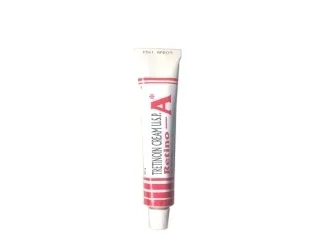
Retin-A Cream
0.025 · 0.05%
Retin-A Cream is tretinoin in a tube for acne vulgaris and photoageing. It comes in several strengths and pack sizes. Each option lists its price per tube.
FromUS$12.35/ tubeView
Photoageing is the harm ultraviolet light leaves on skin after years of exposure, separate from the changes that come with time alone. Most of the visible change taken for ordinary ageing comes from this damage: deep lines, patchy colour, coarse texture and loss of firmness. Where UV intensity stays high through the year, the total load builds quickly, so signs can appear well before middle age.
0.025 · 0.05%
Retin-A Cream is tretinoin in a tube for acne vulgaris and photoageing. It comes in several strengths and pack sizes. Each option lists its price per tube.
Ultraviolet radiation degrades collagen and elastin, the structural proteins that keep skin firm and smooth. Melanocytes react to repeated injury by producing uneven clumps of pigment, which appear as flat brown marks called solar lentigines. The outer layer thickens and roughens, pores look enlarged, and fine blood vessels may show. This is a different process from intrinsic ageing.
Wrinkles that stay at rest, irregular brown patches, a rough surface and skin that no longer springs back are the usual visible features. They tend to appear first on areas that catch the most sun.
Tretinoin is the topical treatment with the strongest evidence behind it. It speeds up cell turnover, encourages new collagen and gradually fades pigmentation. It is applied nightly, beginning at a low strength so the skin can adapt, and fine lines and skin tone usually improve with consistent use over several months. Retin-A Cream contains tretinoin at 0.025% and 0.05% in a tube, and is used for photoageing and acne vulgaris. It sits within the wider skin care group of treatments. Orders reach Malaysia from pharmacy partners in India in discreet packaging.
Any spot that is new, changing or slow to heal is worth showing to a doctor. Persistent irritation from a topical retinoid is another reason to seek review before carrying on.
Last updated